


13 Tips for Fertilizing Your Lawn
Keep your grass healthy and beautiful. Find tips from the experts on everything from when to fertilize and how to choose the right spreader.
Scripps Networks, LLC
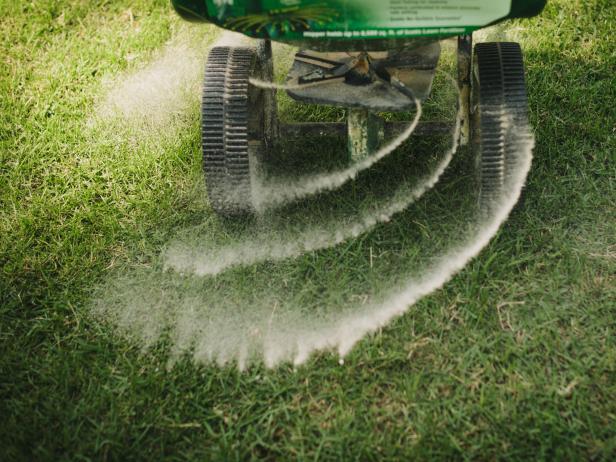
Tip: Before filling the hopper of a rotary spreader, make sure it’s closed. Also, consider filling the hopper over a tarp so you can easily gather any spilled fertilizer.

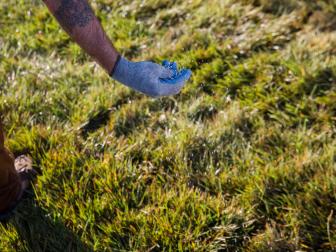
Fertilize your lawn properly, and you'll be on your way to a healthy, dense stand of turf that maintains a deep green color and gives weeds a run for their money.
Nitrogen is every lawn's most important ingredient, and each type of grass demands different amounts to display peak growth and performance. How often you fertilize — and when to fertilize your lawn — affects not only lawn appearance, but also maintenance level. The more you fertilize, the more you'll have to mow, for instance.
The Fertilizer 411
Simplify the important task of choosing the right products for a lush, healthy garden.
1. Using a Broadcast or Rotary Spreader
A broadcast or rotary spreader works well when you're fertilizing larger lawn areas. Before filling the hopper, make sure it's closed. It's a good idea to fill it on a tarp, so you can easily gather any spilled fertilizer. Apply fertilizer around the perimeter of the lawn first, and then start to move back and forth across turf in an orderly pattern. Overlap application strips slightly to ensure that you cover the whole lawn evenly with fertilizer.
2. Using a Drop Spreader
Choose a drop spreader for controlled fertilizer distribution. Overlap slightly on each pass to ensure you have adequate coverage, and don't forget to close the hopper when you come to the end of a pass. You'll typically pay more for a drop spreader, but if you're tending a typical suburban-size lawn, it's worth the investment. If you accidentally dump fertilizer onto your lawn, gather what you can, then use a stiff broom to spread out any remaining fertilizer as far as possible. Water it in well, and do so again a few days later to help move that nitrogen down through soil and out of the lawn's root zone.
3. Using a Handheld Broadcast Spreader
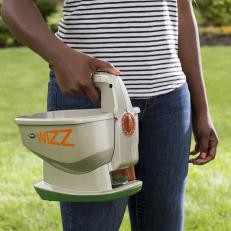
A handheld broadcast spreader works well for fertilizing small lawn areas. Walk evenly and slowly, and be sure to overlap distribution patterns slightly with each pass. A small spreader like this also works really well when you have shady areas in your lawn that require a different fertilizer rate than the sunny sections. Some fertilizers combine an herbicide with the lawn food. These products are sold as weed-and-feed lawn care products and are applied using a lawn spreader.
4. Using a Handheld, Pre-Calibrated, Battery-Powered Spreader
Handheld, pre-calibrated, battery-powered spreaders make application a cinch for small yards. Simply flip a switch and start walking to fertilize your lawn. This type of handheld spreader works well in small yards or areas that make it hard to maneuver a traditional push lawn spreader, like on slopes.
Buy Spreaders Online

5. Fertilizer and Water
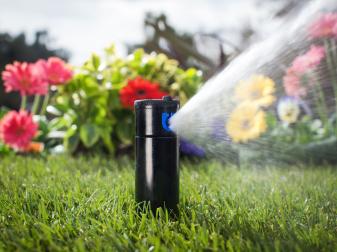
A day or two before applying fertilizer, water your lawn thoroughly. After grass dries, apply fertilizer. Then lightly water again. This second watering is vitally important, because it washes fertilizer off grass blades and into soil. You can also time fertilizer application between rainfalls to let rain wash fertilizer into soil. Just be sure you don't fertilize before a downpour, or you may wind up with fertilizer washing away, especially if your lawn slopes. Avoid applying fertilizer during a drought when a lawn has browned or withered from lack of moisture.
How to Water Your Lawn the Right Way
Learn the ins and outs of lawn irrigation, including expert tips on how long to run the sprinkler.
6. Grasscycling
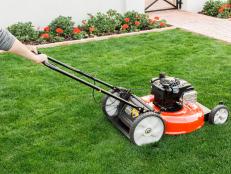
Grasscycling refers to letting grass clippings lie on the lawn after cutting. These clippings can provide up to 25 percent of your lawn's fertilizer needs, saving you time and money. One hundred pounds of lawn clippings can yield up to three to four pounds of nitrogen. On an annual basis, an average half-acre lawn in a temperate zone like Pennsylvania yields more than three tons of grass clippings, so grasscycling can play a big role in nourishing your lawn. You don't need a specialized mulching mower to grasscycle, although you might want to replace your current mower blade with a mulching blade, which cuts grass into smaller pieces that decompose more quickly.
7. Soil Aeration
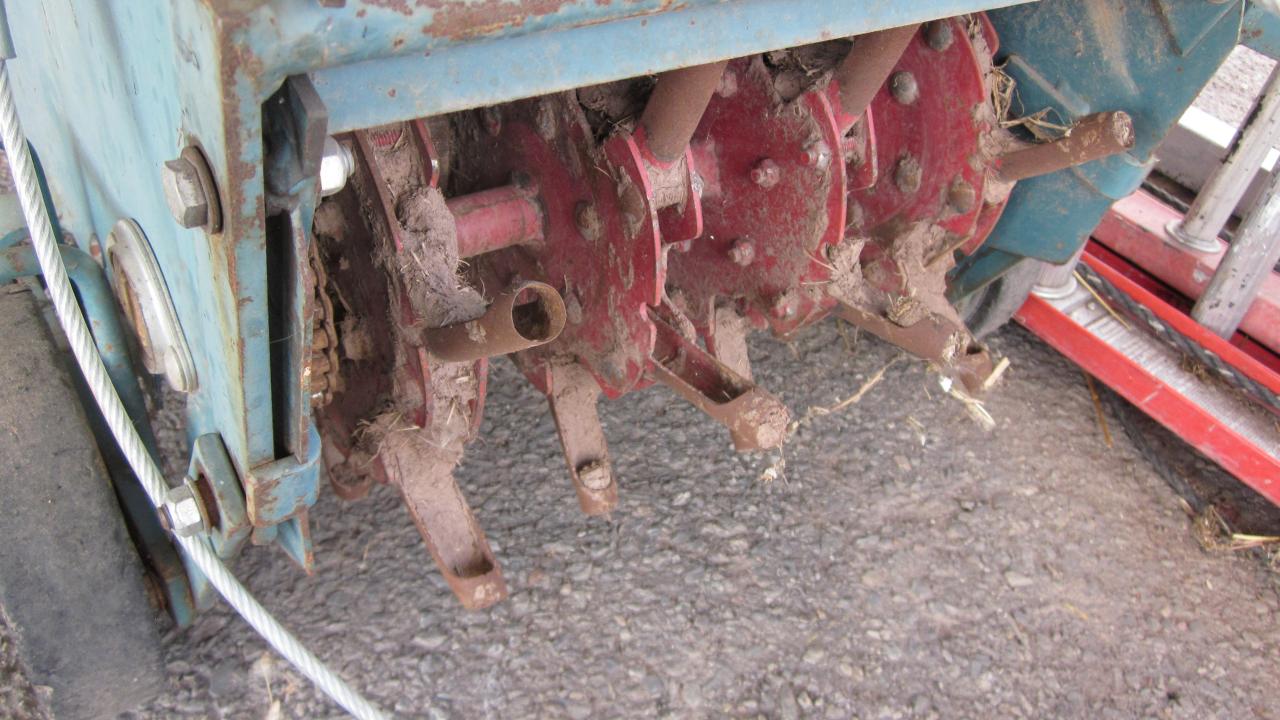
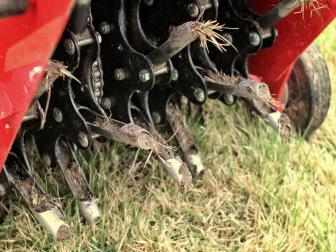
If you plan to aerate your lawn, follow up that task with fertilizing. Lawns benefit from soil aeration, which creates literal holes in soil and exposes the root zone of grass plants. These holes allow water, fertilizer and air direct access to grass roots. For the best aeration, use a core aerator that pulls actual plugs of soil from the lawn (shown below). If you rent this machine, know that it's heavy and requires a strong pair of arms (if not two people) to handle it. Many riding mowers also have core aerator attachments. In small grassy areas, plunging a digging fork into soil accomplishes the task quickly and inexpensively. Aerate whenever the thatch layer is more than one-half-inch thick.
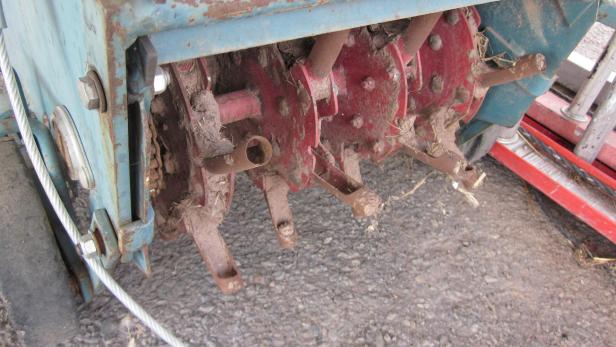
Photo by Julie A. Martens
The best time to aerate grass is just before it enters its most active growth phase. For warm-season grasses, the timing is late spring-early summer. For cool-season grass, it’s early fall.
How to Aerate Your Lawn
Lawn aeration encourages deep roots, resulting in a healthy lawn. Learn how to give your grass a breath of fresh air with these aerating tips.
8. When to Fertilize Lawn: Warm-Season Grasses
When to fertilize depends on what kind of grass you have. You want to time fertilizing so it occurs just before grass enters its peak growing phase. If you live in southern areas where lawns feature warm-season grasses, fertilize turf in late spring or early summer, just before grass kicks into high gear. Make a second application in late summer. If your warm-season lawn goes dormant in winter, don't fertilize after the first of September.
Warm season grass types include bahia, Bermuda, St. Augustine, centipede and zoysia. Warm season grasses typically thrive in frost-free areas and grow best at temps of 75 degrees to 90 degrees.
9. When to Fertilize Lawn: Cool-Season Grasses
Fertilize cool-season grasses in early fall. These fertilizers are often sold under the moniker "winterizer fertilizer." Many lawn care professionals state that cool-season grasses can get by with just one fertilizer application per year in the fall. The fall feeding is responsible for a quick green-up in spring. For most regions where cool-season grasses grow, apply fertilizer in October or November. Make applications before grass starts to discolor with the arrival of cold weather. Check with your local extension office or a reputable garden center to discover the proper timing for your region.
Cool-season grass types include fescue, bluegrass and perennial ryegrass. Cool season grasses grow best at temps of 60 degrees to 75 degrees in areas with cold winters (roughly Zones 5 and colder).
10. Compost as Fertilizer
Many homeowners are trying out organic lawn care practices. Using compost to fertilize turf is one option for earth-friendly lawn care. The nitrogen that compost supplies to a lawn becomes available to grass roots slowly, which helps avoid heavy nitrogen leaching. Excess lawn feeding is one key contributing factor to ground water contamination and is now regulated in some states and municipalities. Check with your local extension office or reputable garden center to learn about any specific guidelines for your region.
11. When to Use Compost
Compost does more than feed grass; it also builds and feeds soil. Compost contains microorganisms, micronutrients and organic matter — items that nourish soil and foster a healthy underground environment in your lawn. When should you use compost? Spread a thin layer over lawns in early spring to fuel strong growth. Any time you plan to aerate, spread compost after aerating to improve soil and give roots a boost. It's also a good idea to apply compost before overseeding thin turf. Add compost to a lawn by the shovelful in several places.
12. Working Compost In
Work compost between individual grass plants using the back of a rake or a stiff broom. Plan to water the lawn after spreading compost to help it settle into soil. Or let nature handle the watering by timing your compost spreading before a good rain. The final compost layer should be thin enough that you can still see grass blades after it's applied.
13. Consider Clover
Consider adding clover to your lawn to provide a natural nitrogen source for soil. Clover roots actually convert nitrogen from the air around them into a nitrogen source that's available for grass roots. Before the advent of modern herbicides, clover was a core component of lawns. These tough little plants blend neatly with modern grasses, and they offer growing qualities like drought tolerance, evergreen foliage (even in cold regions) and low growth stature that doesn't need frequent mowing. Clover is also resistant to many common lawn diseases and pests, including lawn grubs.
More Lawn Care Advice
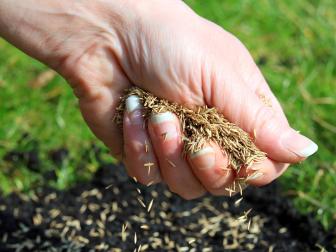
How to Repair Bald Spots in Your Lawn
Learn how to fix bald spots in your lawn by repairing with seed or patching with sod.
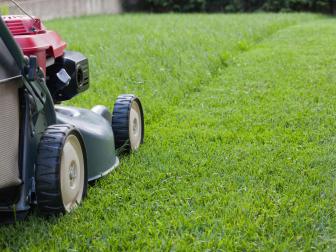
15 Year-Round Lawn Care Tips 15 Photos
Brush up on your lawn care routine with these quick and easy tips.