




First, clear the floor of any appliances or furniture and pop off the baseboards. Next, it’s time for the sub-floor. If yours isn’t a concrete slab, you’ll need to trowel on thin set, lay down concrete backer board and screw in place. Cement backer boards are tin concrete sheets that are used to cover plywood sub floors. Ceramic and stone tiles are not flexible, so they require a more rigid subsurface than other materials. When installing tile over vinyl, it is best to use a high quality latex modified thinset mortar.

Now, find the center point of the room and snap chalk lines for a guide. If you make a dry run before setting the tile, you’ll have better success with your project. To calculate how much tile you will need, multiply the length of the room by the width of the room to get the total square feet. Divide the total square feet of your room by the total square feet the box of tile will cover to determine how many boxes you’ll need.
To set the tiles, trowel adhesive on the floor and then press each on firmly in place. Using spacers when setting tile will assure that you have plenty of room for grout. You may want to use a rubber mallet to tap the tiles into place when setting them in the adhesive. You may need to rent a wet saw to cut tiles that just don’t fit the space.
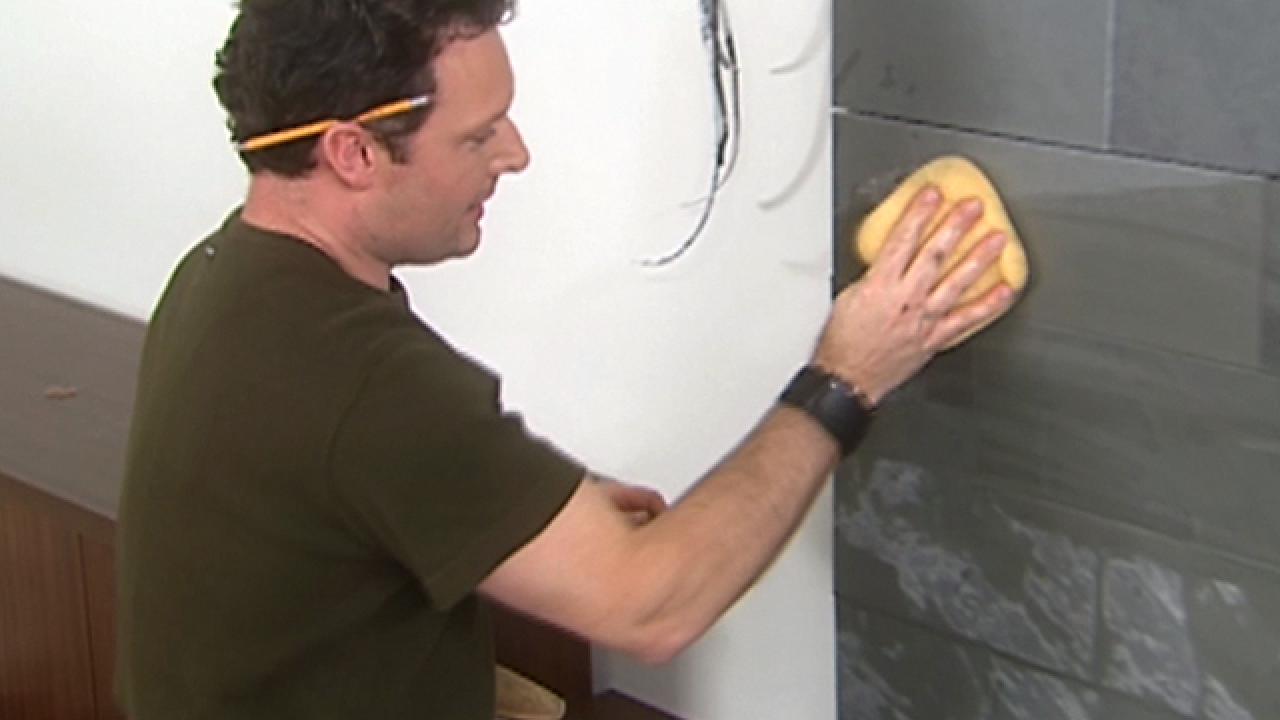
The last step is to apply the grout. Angling the float will help work the grout into the joints. Be sure to wipe the excess with a clean damp sponge. Trowels have different notch sizes. For a flat back tile, a ¼" notch should be sufficient, but for heavily corrugated tiles, you should opt for a 3/8" notch.
Advertisement
All fields are required.
E-mail Address:
Password:
Signing in

Please enter your email address and we will send your password
E-mail Address
Your password has been sent and should arrive in your mailbox very soon.
Sign up with DIY network to share tips with other do-it-yourselfers and comment and ask questions on projects.
It's free and easy.