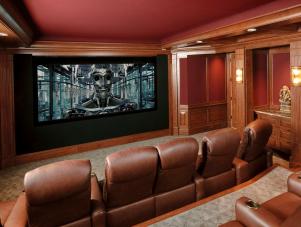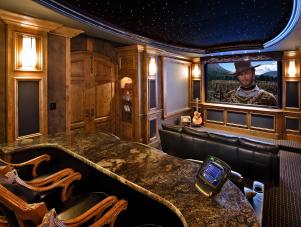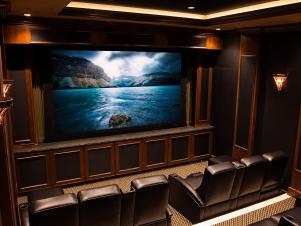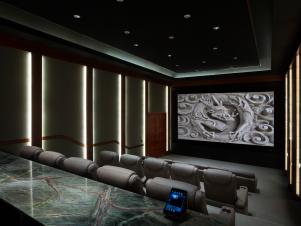




Find out how interior-design elements can improve a home theater experience.
More in Decorating
Ways to Improve Picture and Sound
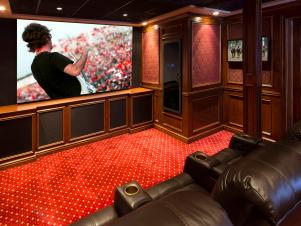
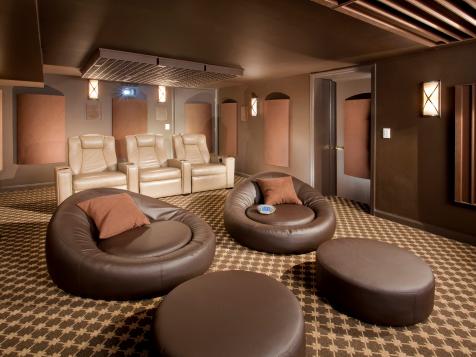
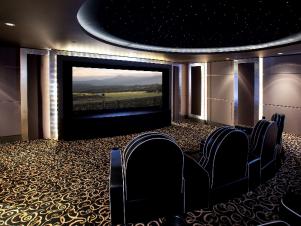
One extremely effective way to absorb sound in a home theater is carpeting. For the DIY project, a thick Berber with standard padding underneath was chosen, but for hardwood or tile floors, try using an area rug that will absorb sound.
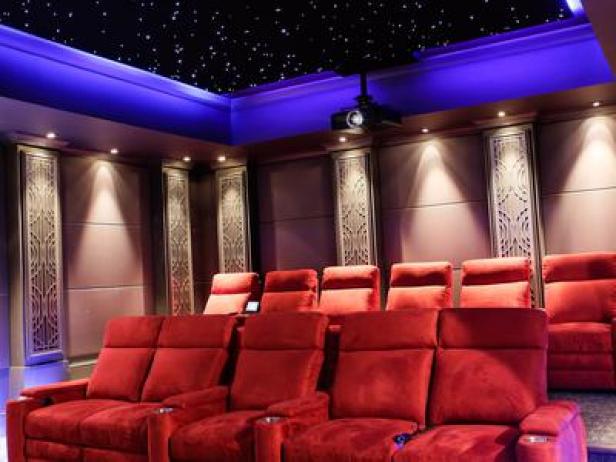
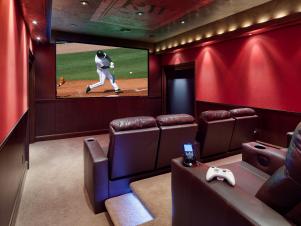
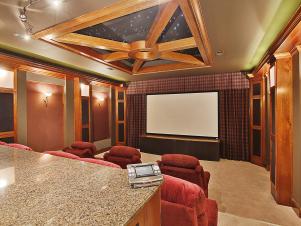
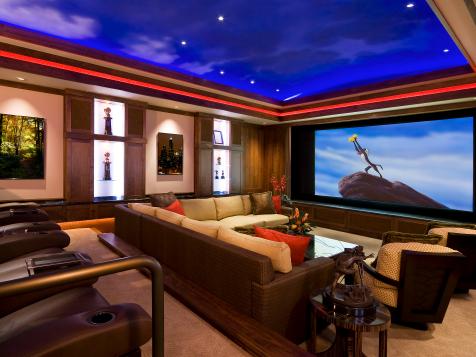
Lighting is also crucial to the overall quality of a home theater. The room should be dark, much like a movie theater but with just enough illumination so people can move around safely. Arrange the light sources so they don't cast any glare on the big screen. Directivity of the lighting is important. For example, track lighting, where you can aim and focus the light, works beautifully.
Avoid table lamps and fluorescents because they will flood the room with light and cast a glare on the screen. Use directional lighting instead.
One of the most important things is to install dimmers, which is an inexpensive way to adjust the level of light in a home theater.
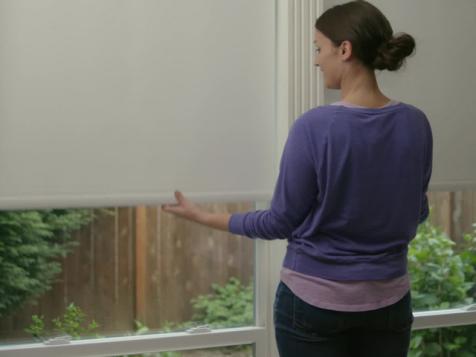
Thick draperies can block out most of the light from windows, but specialty manufacturers make motorized shades and drapes. They cost more than standard fabric draperies and most require professional installation, but they're designed to completely block outside light.
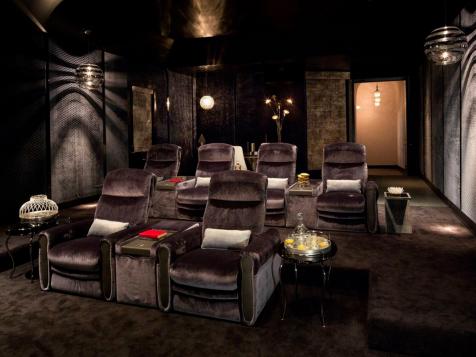
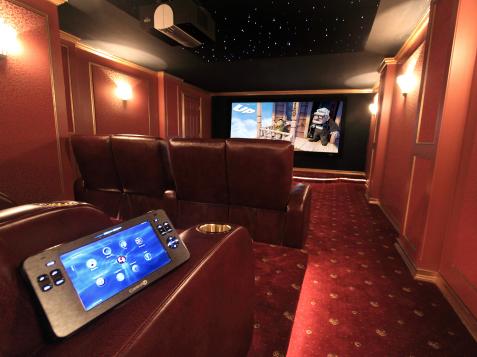
The color of the room can also help reduce screen glare. When it comes to the walls and ceiling, the goal is to not use anything that would distract from the room's focal point -- the video screen.
Cover walls with acoustic fabric, like in movie theaters.
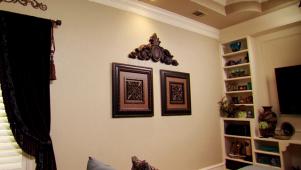
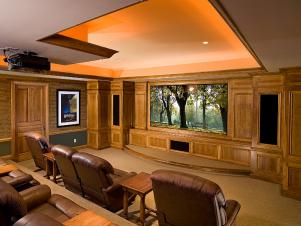
Paint the home theater a dark color, but don't use a gloss, semi-gloss or satin finish. Use a flat, no-glare paint. This homeowner, Peter Moore, painted his ceiling and the screen wall a flat black, which is perfect for a movie room. But for the remaining three walls he chose a color that didn't quite work -- a lighter shade of yellow. This was a bad choice because it lets light reflect off the screen and walls and into the viewers' eyes. Stick to a darker shade of paint if creating a custom theater from scratch. As with many do-it-yourselfers, Peter had to paint over.
The door is the weakest link in sound transmission. Standard-grade interior doors can let sound filter into other parts of the house via gaps between the door and walls.
Pocket doors do let a lot of sound leak, but the homeowner wanted a grand entrance into the home theater -- and in this case that's okay because the only thing outside the room are some equipment racks and a stairwell leading upstairs. At that door we installed some special sound-isolation material -- basically a weather-stripping gadget that goes on the bottom of the door -- and it costs under $100.
When the door closes, this material triggers off the door sill and drops a small seal at the bottom that helps isolate the sound. The other three sides of the door were also treated with a weather-stripping type material that keeps the sound from getting through any of the cracks.
An exterior-grade garage door with weather stripping all around it with a threshold at the bottom was also used. Mark recommends using an exterior-grade door even for an interior door leading into your home theater to get good sound isolation.
Furniture for Your Home Theater
When it comes to furniture for a home theater, one can find expensive, high-quality cabinets to house gear. For the DIYer on a budget, equipment cabinets don't have to be made of expensive wood or have a fine finish.
For the DIY project home theater, a simple plywood cabinet is built under the screen to house the subwoofers, and then painted black. When the subs are in place, a hinged door frame covered with acoustic fabric will be added, and this will allow sound to pass through.
The receiver, DVD player and other gear will be housed in metal racks just outside the pocket doors. It's a few steps away, but by being in another room, it cuts down on acoustic interference from cooling fans and other sounds from the equipment.
The media storage plywood cabinets are built and placed in the back of the room, out of sight from the viewing positions. The cabinets also double as acoustic absorbers for sound waves bouncing around the back of the room.
Advertisement
Tell us what you need, and we'll help you find the best service providers in your area.